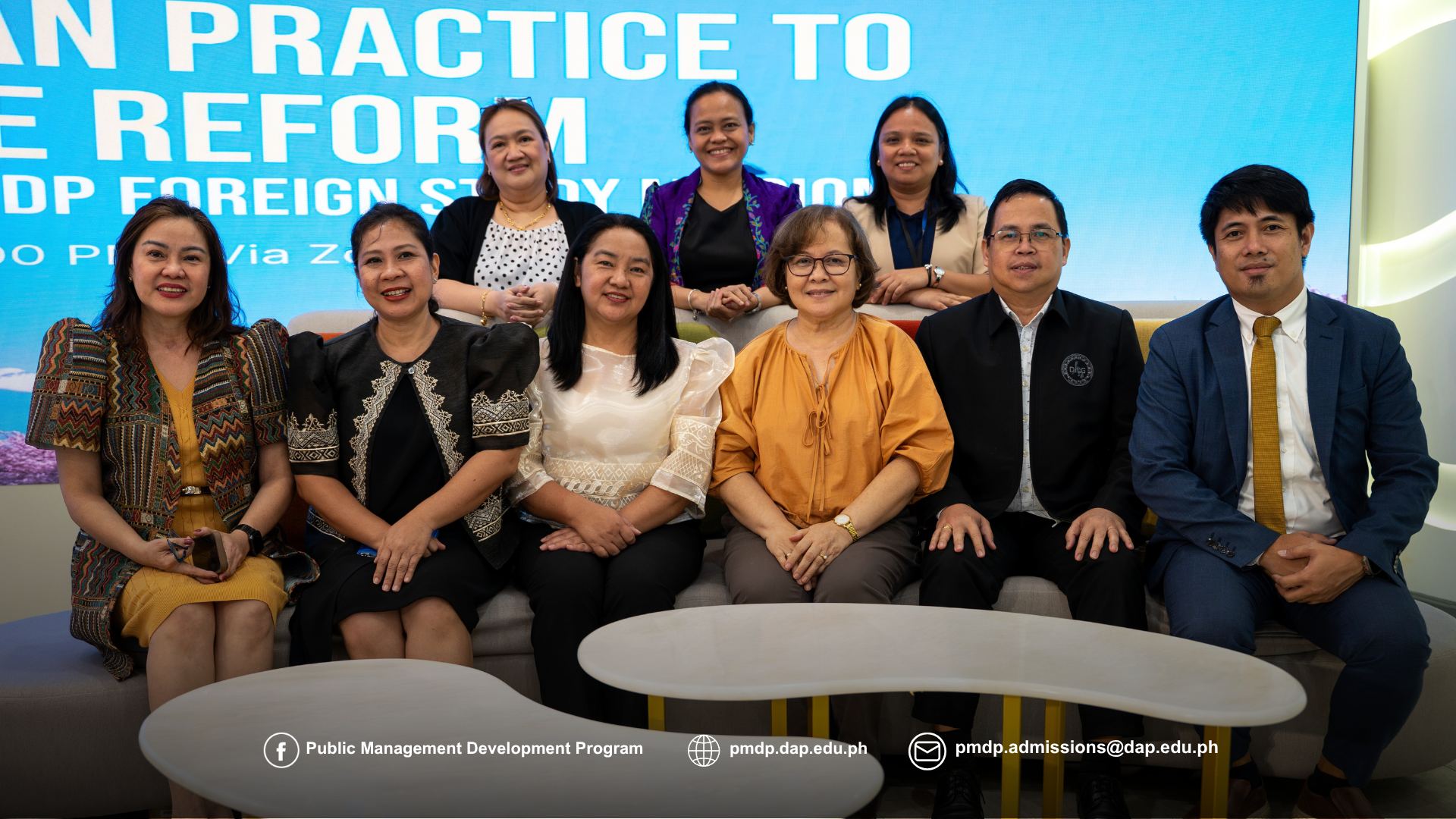
PASIG CITY — International practices become truly meaningful when understood in local context and translated into solutions that respond to the needs of Filipinos.
This was the central message of the second session of the webinar titled, “From Asian Practice to Philippine Reform: Insights from PMDP Foreign Study Mission,” organized by the Development Academy of the Philippines (DAP) through the Center for CES Development (CCD), held on 21 September 2026 at the IGH Multimedia Center, DAP Pasig.
Following its successful first run session in May, the session featured a new batch of Public Management Development Program (PMDP) alumni from Senior Executives Class (SEC) and Wise (Phronetic) Leadership Class (WLC) who shared key takeaways from their foreign study missions in Japan and Indonesia. The alumni offered practical perspectives on how reforms are implemented and sustained across different governance contexts.
CCD-Advocacy and Admission Office (AAO) Director Reina Carmelita F. Young served as Master of Ceremonies while Assistant Regional Director for Operations Mylah S. Gatchalian of the Department of the Social Welfare and Development (DSWD), moderated the discussion.
In her opening remarks, CCD Vice President Myda A. Nieves , underscored that while FSMs aim to address shared public sector challenges, the real value lies in localizing global lessons.
“That’s the heart of the FSM, to learn how other countries handle common governance challenges. But the real challenge is not just learning abroad, but translating these lessons into reforms that fit the Philippine context,” she said.
She added that as the country celebrates Civil Service Month, public servants are reminded that the ultimate measure of learning is its practical application for the Filipino people.
Turning Japanese lessons into better public service
For Francisco R. Cruz (WLC 3 – Covid20), Assistant Secretary for Plans and Programs of the Department of Interior and Local Government, the Japan mission underscored how innovation can make government services more responsive without losing the human element.
He highlighted Japan’s emphasis on efficiency, discipline, and people-centered service, citing the Seven Minute Miracle by JR East TESSEI Co.—a renowned cleaning system for the Shinkansen bullet train—as a model of precision and malasakit in public service.
“An innovation should progressively take shape but never lose sight of its true dimension. It should never forget the people it is meant to serve,” ASec. Cruz said.
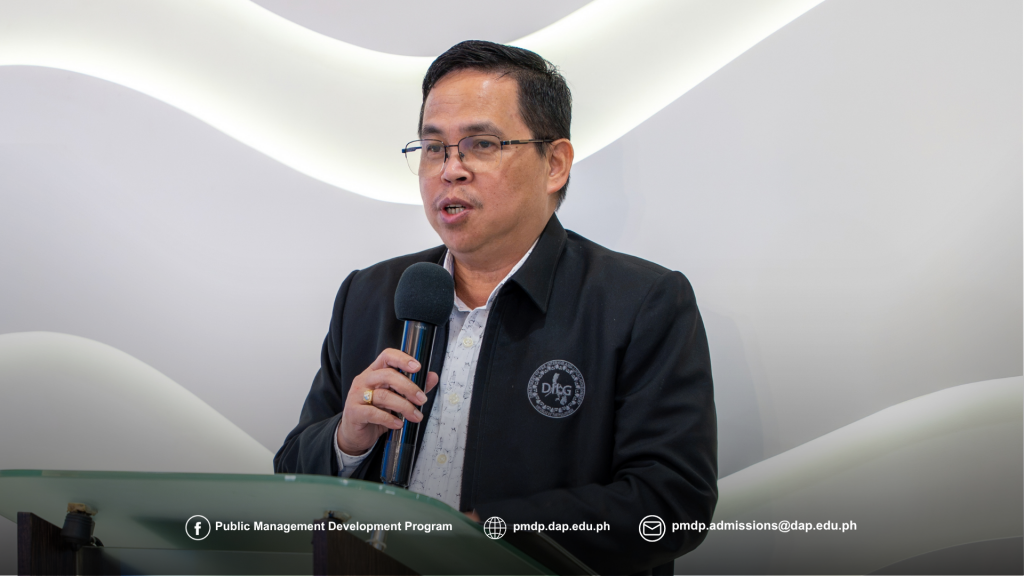
ASec. Francisco R. Cruz, who underwent his foreign study mission in Japan, shares the lessons he gained and how he applied them in his own agency.
He connected these lessons to Philippine initiatives such as SUBAYBayan (Subaybayan ang Proyekto ng Bayan), a public online platform that allows the public to monitor government projects, and the Unified Emergency 9-1-1, which integrates emergency response across agencies.
For ASec. Cruz, technology and innovation matter most when they improve people’s experience of government, particularly during difficult times.
Learning from Indonesia’s digital transformation
Assistant Vice President for Project Management Department of the Development Bank of the Philippines Erick John H. Marmol (SEC 12 – Sikhay) shared lessons from Indonesia’s experience in managing a highly digitalized government. With thousands of government applications, Indonesia faced challenges involving duplication, fragmented systems, and data integration.
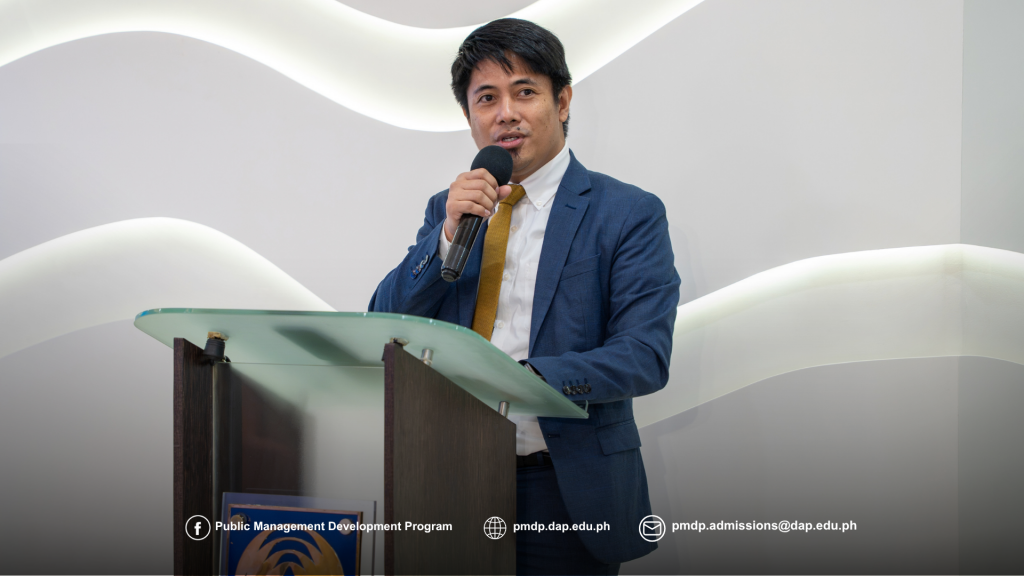
AVP Erick John H. Marmol delivers his presentation on his foreign study mission in Indonesia, highlighting his experience in managing a highly digitalized government.
Its response included a whole-of-government digital framework, enterprise architecture, data-center consolidation, and application assessment—approaches relevant to the Philippines’ own digital transformation efforts.
AVP Marmol also highlighted Indonesia’s risk-based licensing system, which adjusts requirements based on the level of risk, and its use of data standards to improve interoperability.
“Sometimes, it is about delivering the best and the most relevant solution,” he said, stressing that innovation should be practical, inclusive, and suited to local conditions.
Applying Japan’s environmental lessons to DSWD reforms
Assistant Secretary for Regulatory Services and Institutional Development Group of the Department of Social Welfare and Development Janet P. Armas (WLC 7 – LakbAI) shared how Japan’s practices on waste management, sustainability, and the circular economy influenced reforms at DSWD.
She emphasized that sustainable reform depends not only on technology but also on changing behaviors and mindsets.
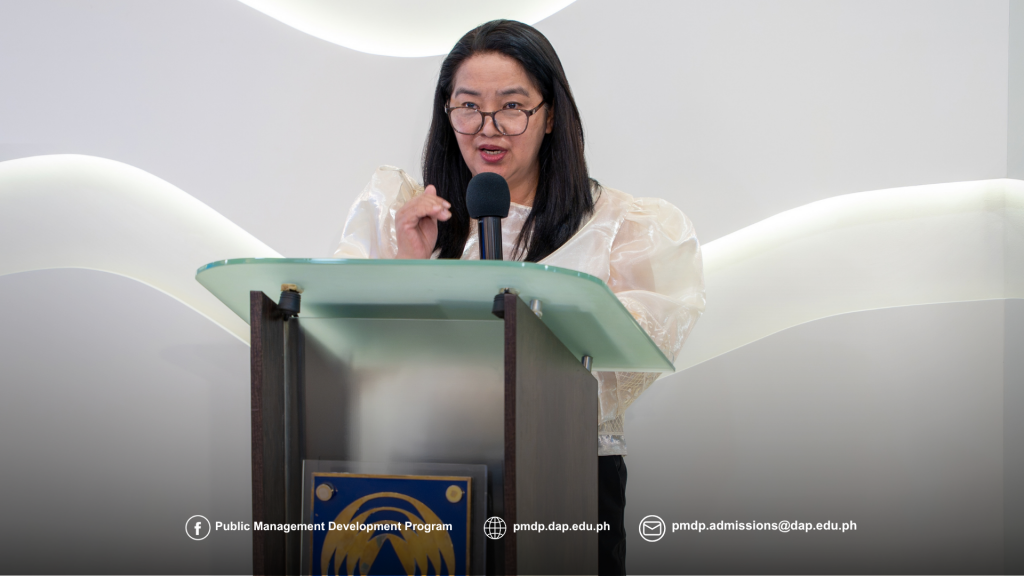
ASec. Janet P. Armas delivers her presentation on the lessons she gained from Japan, particularly on waste management, sustainability, and the circular economy, and how these influenced reforms at DSWD.
This perspective informed efforts to streamline DSWD’s permit and licensing system, which previously required up to 57 documents and could take months to process. Stakeholder consultations with civil society and parents helped identify further improvements.
For ASec. Armas, continuous consultation is essential to ensuring that reforms are both effective and sustainable.
“We provided the training, they gave the recommendations, and as we go along, they’re continuously helping us with what should be streamlined further,” she said.
Japan: Bringing systems thinking to agriculture
Undersecretary for High Value Crops of the Department of Agriculture (DA) Cheryl Marie Natividad-Caballero (WLC 7 – LakbAI) emphasized Japan’s culture of leadership, systems thinking, and continuous improvement.
She connected these lessons to DA initiatives such as community-based vegetable seedling production, which aims to help communities become more self-sustaining rather than dependent on continuous government support.
“The leadership task here is to make the Bayanihan more operational through standards, transparent allocation, and feedback from communities,” she said.
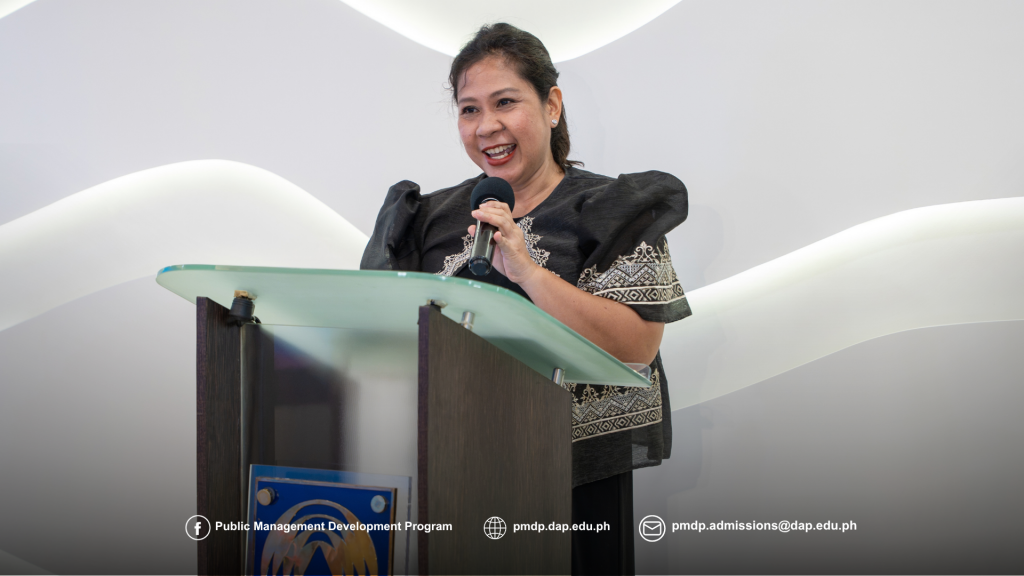
USec. Cheryl Marie Natividad-Caballero highlights in her presentation Japan’s culture of leadership, systems thinking, and continuous improvement.
She also cited the Sustainable Agroforestry Farm Enterprise (SAFE) Project, which brings together agriculture, environmental sustainability, financing, local governments, communities, private-sector partners, and technology.
While digital tools and AI can strengthen planning, Caballero stressed that technology must complement human judgment and reliable, ground-level data.
ARD Gatchalian provided a synthesis of the key insights from the session, highlighting the importance of breaking silos, strengthening partnerships, and applying systems thinking in public-sector reform.
The session further gained momentum through a panel discussion and open forum that explored how governance practices from Japan and Indonesia can be adapted to the Philippine context, particularly in fostering inter-agency collaboration, community participation, digital transformation, and continuous improvement. The interactive segment actively engaged online participants by addressing their questions while speakers emphasized translating these international lessons into actionable public service solutions.
ARD Gatchalian closed the discussion by challenging participants to translate the lessons from the two countries into practical actions that can help make Philippine public service more responsive, and results-oriented.
In her closing remarks, CCD-Senior Executive Development Office Director Sheryl D. Reyes thanked the presenters, moderator, and participants for making the session meaningful and informative. She emphasized that the value of foreign study missions lies not only in the lessons learned abroad, but in how these are shared and applied in Philippine public service.
Director Reyes encouraged PMDP alumni to integrate their learnings into their agencies and continue fostering a culture of knowledge exchange and continuous improvement.
“A learning mission abroad is not a final destination but rather a start of a more profound journey,” Director Reyes said.
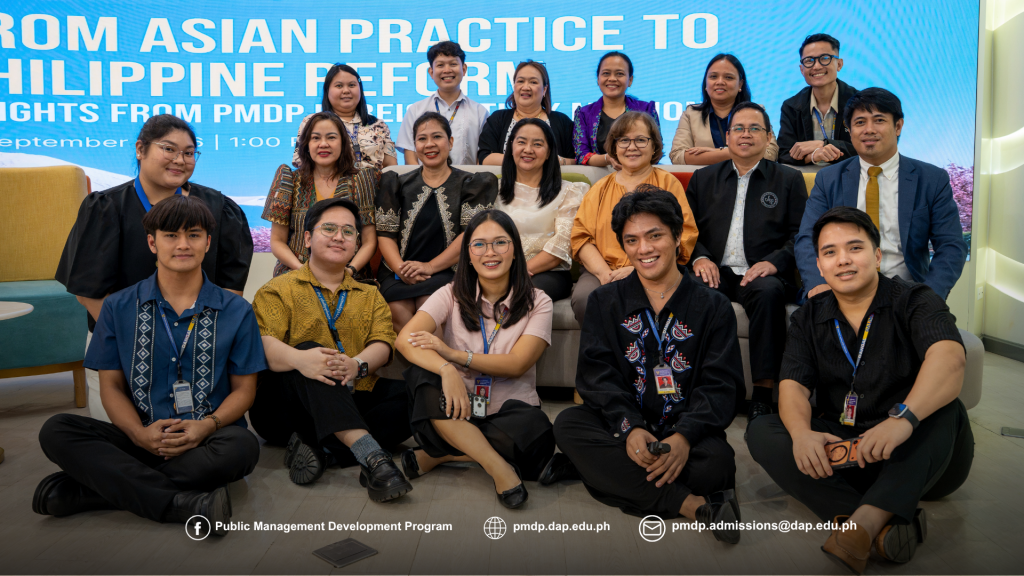
CCD Vice President Myda A. Nieves (4th from the left, 3rd row); AAO Director Carmelita F. Young (3rd from the left, 3rd row); SEDO Director Sheryl B. Reyes (5th from the left, 3rd row); former CCD Vice President Nanette Caparros (5th from the left, 2nd row); and the PMDP team pose for a group photo with the presenters and moderator to cap off the Foreign Study Mission at the IGH Multimedia Center, DAP Pasig, on 21 September 2026.