

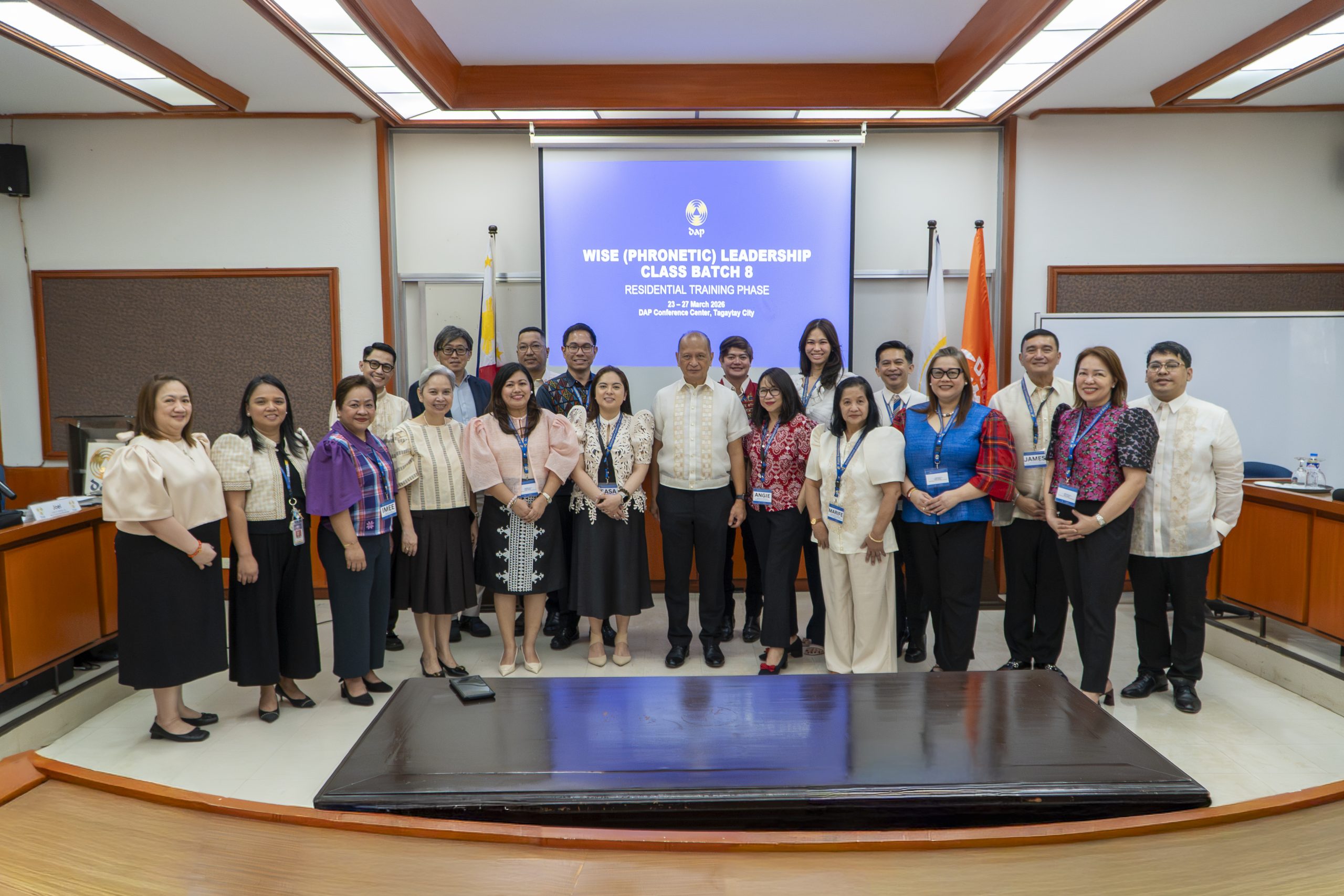
Aiming to strengthen collaborative leadership and advance real-world policy solutions through artificial intelligence (AI), the Public Management Development Program (PMDP) welcomed the 8th batch of the Wise (Phronetic) Leaders Class (WLC) at the Development Academy of the Philippines (DAP) Conference Center in Tagaytay City on Monday, 23 March 2026.
Composed of 13 scholars from various national government agencies, the cohort convened for a five-day residential training designed to equip senior officials with practical leadership tools and emerging digital competencies.
In his welcome remarks, DAP Acting President and CEO Dr. Leocadio S. Sebastian underscored the program’s focus on ethical and transformative leadership in the age of AI, while pressing the issues confronting public institutions.
“During this period, we have a very serious challenge, especially in government, among our officials and institutions. And what is that very significant challenge that we are facing? AI? No. This is our biggest challenge in our government—the trust deficit, because of the corruption cases,” he said.
Despite the rapid advancement of technology, Dr. Sebastian emphasized that leadership remains central to rebuilding public confidence.
“Technology and AI can improve trust, but it cannot replace intelligent leadership that has context-sensitive solutions. Let us lead in strengthening the trust of our people in our government,” he added.
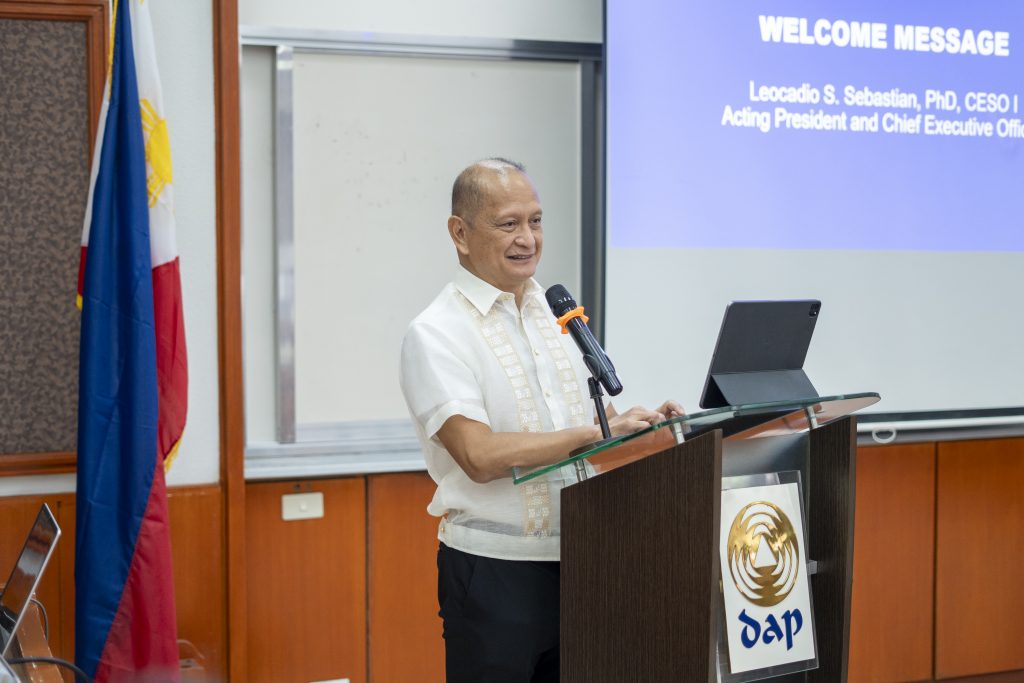
Dr. Leocadio S. Sebastian, Acting President and CEO of the Development Academy of the Philippines, delivered the welcome remarks, formally opening the program and setting its direction.
Meanwhile, Acting Executive Vice President and Senior Vice President for Programs Magdalena L. Mendoza provided an overview of the program, tracing its origins to a multi-country research initiative on leadership development across Asia, emphasizing that effective governance is rooted in strong leadership and sound management practices.
Mendoza also highlighted the role of emerging technologies in governance, noting that participants are expected to explore how AI can be applied to support national priorities.
“The idea is how you apply AI to accelerate economic and social transformation and to share and synthesize knowledge on development and delivery challenges,” she added.
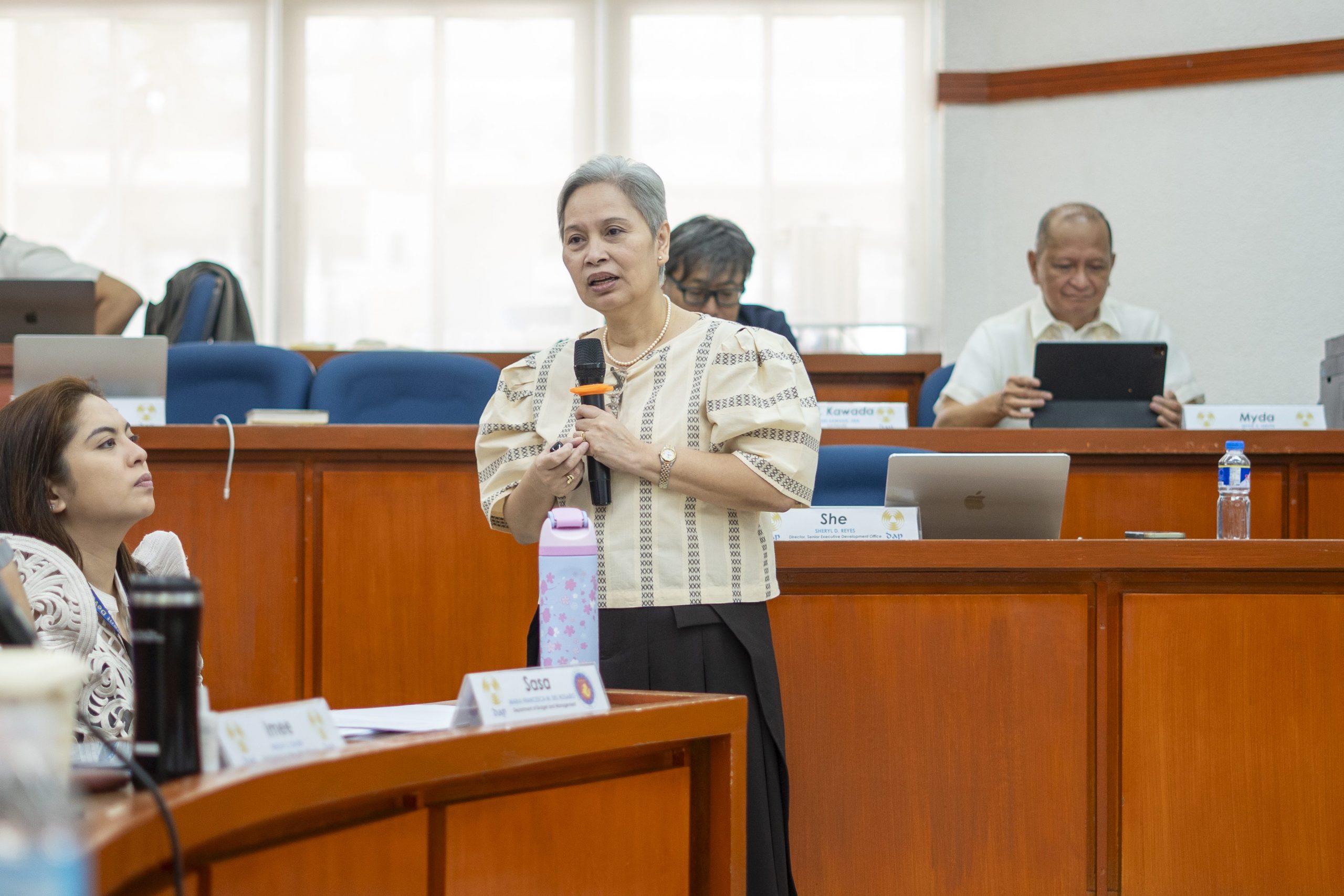
Acting Executive Vice President and Senior Vice President for Programs Magdalena L. Mendoza welcomed the scholars and provided an overview of the program’s structure, objectives, and expectations.
The opening program also featured interactive activities aimed at fostering collaboration among participants. Scholars took part in a “getting-to-know-you” session, where they shared a favorite photo and the story behind it, encouraging personal reflection and connection within the group.
One of the highlights of the opening day was a knowledge exercise led by Phronetic Co., Ltd. Chief Executive Officer and WLC Batch 8 Faculty-in-Charge Professor Hideki Kawada, who facilitated a series of engaging activities which tested the scholars’ problem-solving, critical thinking, collaboration, mutual support, and leadership skills.
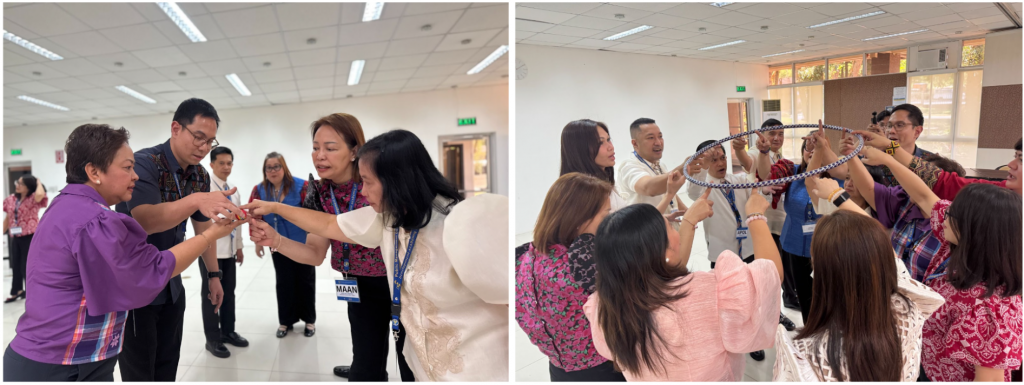
Scholars engaged in a series of interactive activities led by Professor Hideki Kawada, CEO of Phronetic Co., Ltd. and Faculty-in-charge of WLC Batch 8.
The five-day residential training marks the first phase of the program to be followed by further learning engagements and a co-creation project aimed at addressing cross-sectoral issues in the public sector.