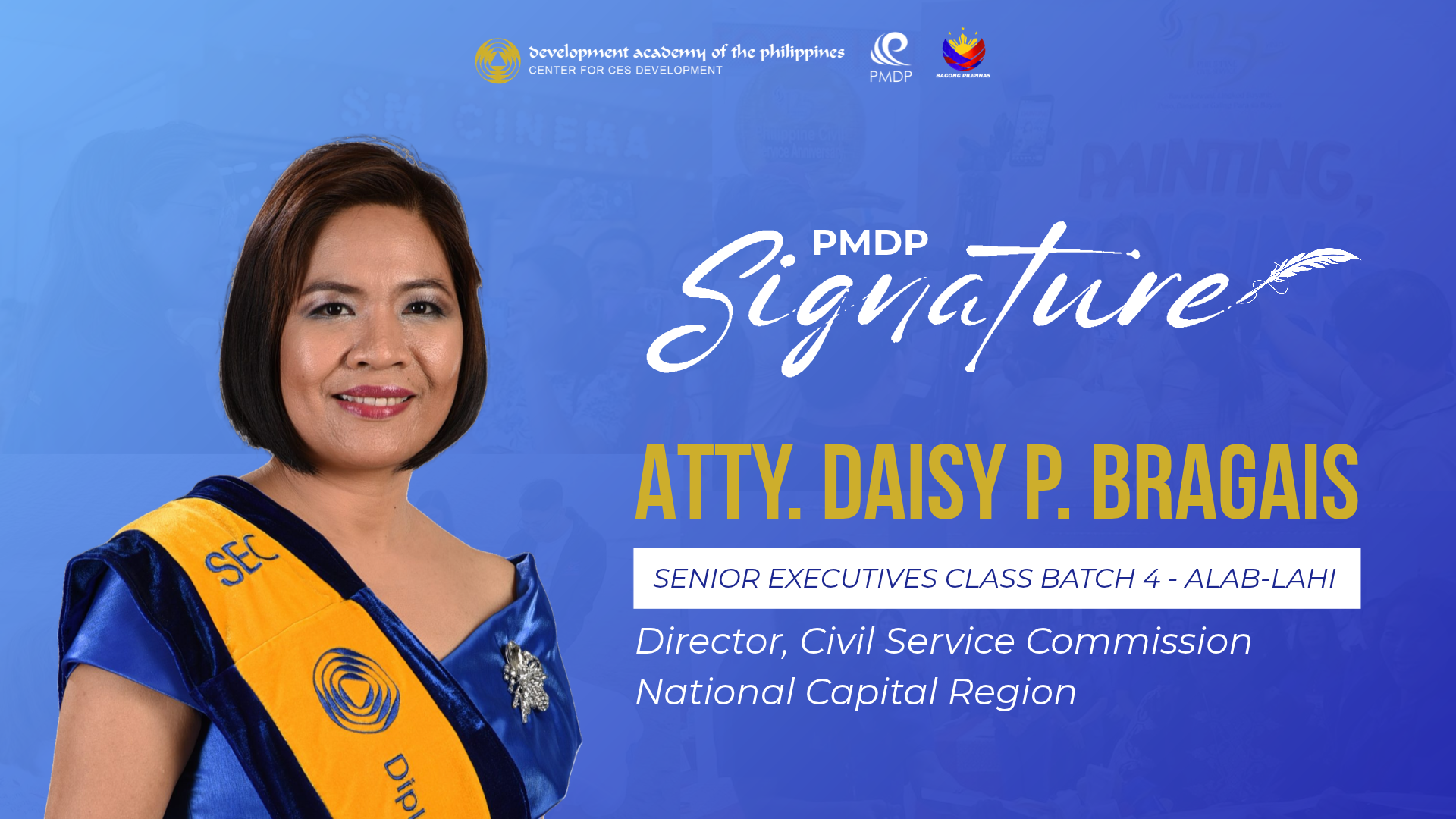
BY JHON OLIVER NERY
Meaningful change in government does not always begin with new policies or sweeping reforms. Sometimes, it starts with a leader willing to listen, a workplace ready to improve, and a commitment to make public service more responsive to the people it serves.
For Atty. Daisy P. Bragais, transforming public service begins with a simple principle: institutions become better when the people within them are empowered to grow, work together, and serve with purpose.
Throughout her career at the Civil Service Commission (CSC), she has seen how leadership can shape not only an organization’s performance but also the experiences of the people who depend on its services. Her approach to reform puts people at the center—both the employees who deliver government services and the citizens who rely on them.
It is a philosophy grounded in the belief that public service is not simply about completing tasks or maintaining established systems. It is about continuously asking whether the work being done still makes a meaningful difference.
A career built from the ground up
A career civil servant, Atty. Bragais began her journey in 1995 at the Civil Service Commission (CSC) Regional Office V in Bicol. She graduated cum laude from Bicol University in 1994 with a degree in Business Administration, majoring in Management. She later earned a Master’s Degree in Management from the same university in 1998 and a Bachelor of Laws/Juris Doctor from the University of Nueva Caceres in 2003.
Before joining the government, she worked as a college instructor in Legazpi City. Although she entered the workforce with the idealism and energy of a new graduate, the experience eventually led her to reconsider whether teaching was the right path for her.
“I found myself on the brink of burning out because we had this faculty development, and then one psychologist gave us a test, and the result was, I was already on a stage of burning out,” she said. “And so, I was asking myself, is this the right job for me, knowing that I had a lot of frustrations teaching because coming from a public school, I was used to preparing before I go to class.”
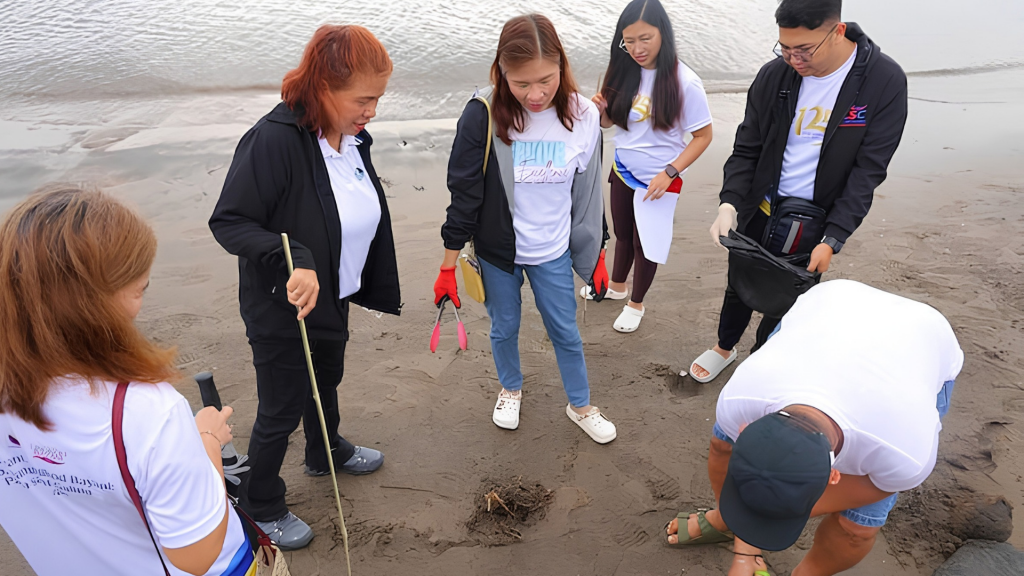
Photo Courtesy of Atty. Daisy P. Bragais
A CSC job fair offered an unexpected turn.
She initially applied for a Personnel Analyst position, but by the time she received notice from the Commission, the vacancy had changed. The position available was Clerk III.
She took it.
“So, I really started at the bottom,” she recalled.
That first position would eventually lead to decades of experience in the civil service, including leadership roles in CSC Region V as Attorney VI, Director III, and Director IV, and, more recently, in the National Capital Region.
A different way of public service
In 2015, while serving as Director III of CSC Region V, Atty. Bragais became a scholar of the Public Management Development Program (PMDP) under Senior Executives Class Batch 4 – Alab-Lahi. According to her, balancing the demands of executive work with the demands of graduate-level study was difficult. She travelled to the DAP Conference Center in Tagaytay for intensive learning sessions while continuing to perform her regular responsibilities.
The program exposed her to economics, policymaking, public finance, self-awareness, and other areas of public management. But among the lessons she carried with her, one stood out above the rest.
“Being citizen-centric,I think that’s the thing na talagang nadala ko from my PMDP experience,” she said.
(Being citizen-centric, I think that’s the thing that I really carried over from my PMDP experience.)
For Atty. Bragais, being citizen-centric means placing people’s needs and experiences at the heart of government work. It also means recognizing that the quality of public service depends heavily on the people delivering it.
When she became a Regional Director, she made workplace transformation a priority.
“I put people first. I listened to the people,” she said.
Her philosophy is straightforward: take care of the people inside the institution so they can better take care of the people outside it.
“I always believe that if you take care of your people, they will take care of your clients or your customers,” she added.
Reforming the system from within
For Atty. Bragais, civil service reform cannot rely solely on legacy practices. Government institutions have to keep asking whether they remain relevant to the people they serve.
“We should continuously aim to innovate,” she said.
That means investing in upskilling and preparing employees for digital transformation. It also means being willing to examine how institutions work, rather than assuming that established practices remain effective simply because they have existed for a long time.
The question, she suggested, is ultimately one of relevance: Are government institutions still responding to the needs of the people today?

Photo Courtesy of Atty. Daisy P. Bragais
Her approach to reform is therefore both institutional and human.
It includes developing employees, strengthening leaders, preparing successors, improving workplace culture, and creating systems that allow organizations to adapt. It also includes accountability.
Having served as chief of the CSC’s legal department, Atty. Bragais has seen how accountability mechanisms form part of the public’s relationship with government. Transparency and responsiveness matter, but so does the assurance that government employees are held accountable for wrongdoing.
“‘Pag nakikita kasi ng mga tao that nothing’s being done for all the things that are being reported, then they start losing that faith in the government,” she said. “So, importante talaga ‘yung accountability.”
(When people see that nothing’s being done for all the things that are being reported, then they start losing that faith in the government) (So, accountability is really important.)
For her, accountability is not separate from citizen-centric service. It is one of the mechanisms through which public trust is sustained.
Listening before leading
Her transition from Region V to CSC-NCR has given her an opportunity to apply these principles in a very different environment.
The volume of transactions is significantly greater, and the challenges of the country’s largest CSC regional office differ from those she encountered in Bicol.
But her first response was familiar: listen.
Within her first months in NCR, she launched CSC-NCR Forward, a set of ten priorities for the regional office. The initiative began with an anonymous listening survey asking employees what the organization should stop, start, and continue doing.
From those responses, she identified areas for action, including capacity building, leadership development, and partnerships with stakeholders.
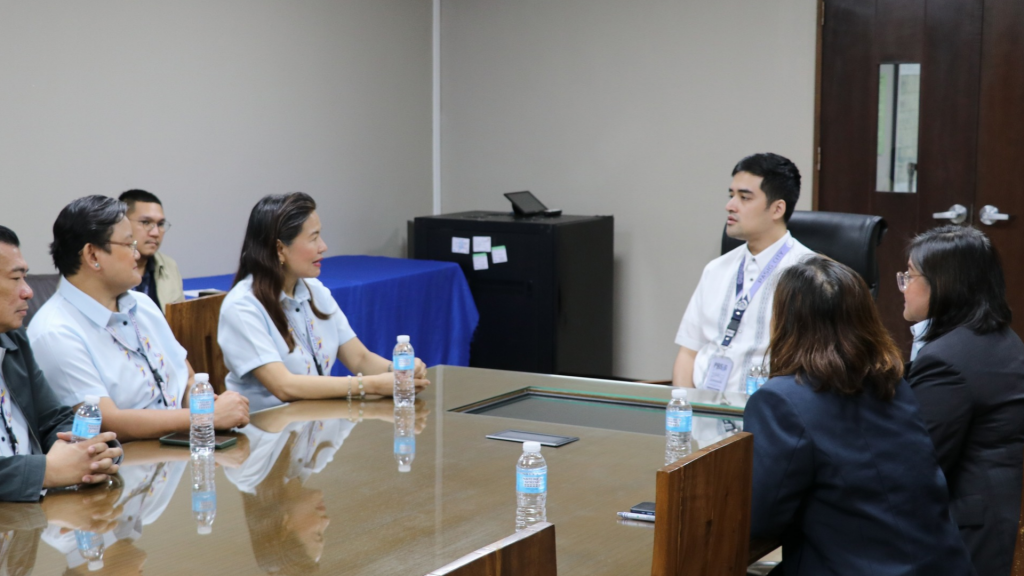
Photo Courtesy of Atty. Daisy P. Bragais
The process reflects her broader view of leadership: transformation should begin with an understanding of the people and systems already in place.
At the center of that transformation is a belief that public service should have meaning beyond the salary attached to it.
“We should always ask ourselves, masaya ba ako sa nagawa ko ngayong araw?” she said. For Atty. Bragais, that question is part of the culture she hopes to cultivate among her colleagues.
(We should always ask ourselves, am I happy with what I did today?)
Excellence recognized from the ranks
Atty. Bragais’ commitment to leadership and citizen-centered governance has also been recognized through several awards and distinctions.
In 2016, she was named an Outstanding Centennial Awardee by her alma mater, Bicol University. In 2022, she received the Gawad Katangi-Tanging Pinuno from the CSC.
In 2024, she was honored as a Dangal Awardee during the PMDP Leadership Conference. The distinction recognized her contributions to public administration, her leadership within the CSC, and her continued embodiment of the values nurtured during her Alab-Lahi journey.
For someone who began her career as a Clerk III, the recognition carries a particular significance. Her story is, in many ways, a reminder that leadership in government can be built from the ground up.
Preparing the civil service for what comes next
The future of government work, she believes, will require institutions to respond to a workforce that is increasingly multigenerational and digitally oriented.
Generation X leaders now work alongside millennials and members of Generation Z, each bringing different experiences and expectations to the workplace.
Among the challenges she identifies are employee well-being, work-life harmony, opportunities for growth, and the need for organizations to create workplaces where younger civil servants can see a future for themselves.
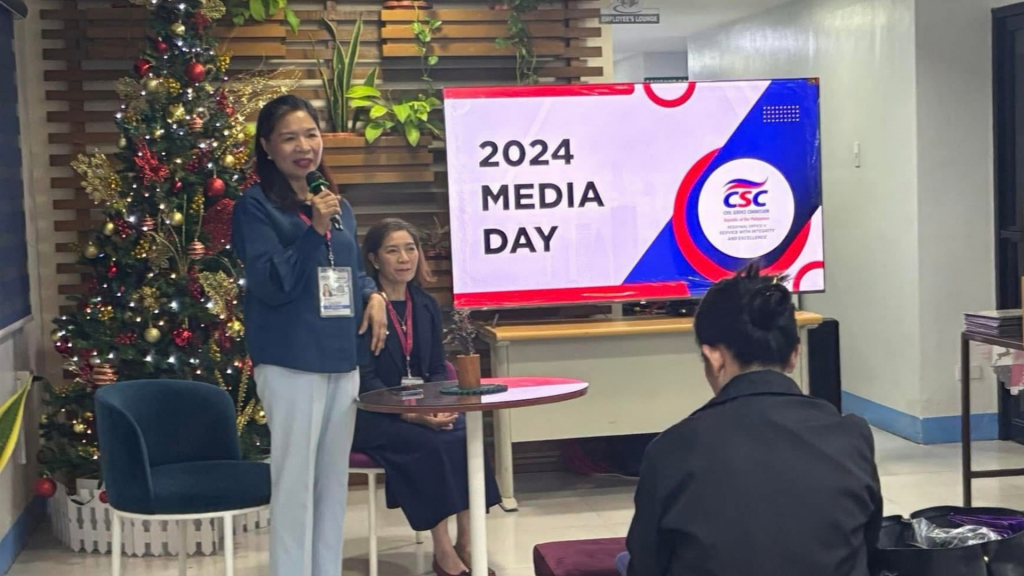
Photo Courtesy of Atty. Daisy P. Bragais
That makes capacity building more than a training requirement. It becomes part of continuity.
Atty. Bragais emphasized the importance of preparing people before vacancies occur.
“Kung may [employee] na mag-retire, kung may umalis, or kung anumang vacancy ang magkaroon,” she said, organizations should already have people prepared to step in.
That is also why she advocates for institutionalized mentoring and coaching.
Leaders, she said, need to make time to guide.
For Atty. Bragais, this commitment to developing future public servants reflects the heart of public service.
“I think very apt ‘yung 126th Philippine Civil Service Anniversary, na ‘yung bawat kawani, lingkod-bayani, puso, dangal, at galing para sa bayan. Andiyan ‘yung dangal natin dahil dumaan tayo sa PMDP, and of course ‘yung ating galing dahil nag-PMDP pa rin tayo,” she said.
(I think the theme of the 126th Philippine Civil Service Anniversary is very apt—that every employee is a servant-hero [embodying] heart, integrity, and excellence for the nation. Our integrity is right there because we went through the PMDP, and of course, our excellence is also there because we still took the PMDP)